

Dr Xenia Pestova Bennett
Do you feel frustrated, inadequate and exposed on stage? Would you like to move to a place of enthusiasm and confidence as you share your love of music with your audiences, friends and family?
This is possible for all of us – we just need to be willing to befriend and work together with rather than against our anxiety symptoms and negative thoughts!
Performance anxiety is a universal experience, a survival mechanism that is hard-wired. Symptoms vary, but many of us get shaky limbs, blurry vision, dry mouth, shallow fast breathing, rapid heart rate, sweaty and cold hands (personally, I get both sweaty palms AND cold fingers – the worst possible combination for a pianist!).
Even talking about these symptoms can make some of us experience them. This is our sympathetic nervous system kicking into action and responding to perceived as well as real danger (the so-called “fight-or-flight”). To make matters worse, many of us can exaggerate the sympathetic response and literally sabotage ourselves with negative thoughts before, during and after playing for others, spinning into uncontrollable worry-loops instead of activating the parasympathetic “rest-and-digest” response to return to equilibrium.
Searching for solutions can be overwhelming when we don’t have access to resources. Here some starting points that can help.
- Develop a toolkit of routines (to be used before performing):
At times, our negative self-talk can be difficult to access and rationalise through simply thinking or analysing. This can be especially difficult when we are nervous, waiting to go on stage to perform. Bypass the worry-loops of the mind by approaching them through the body and doing something physical that makes you move and also releases tension and cultivates relaxation.
- Cultivate non-reactivity (before, during and after performing):
Notice and recognise negative thoughts. We can learn a lot from approaches to non-reactivity in mindfulness meditation. Mindfulness practices also have strong connections to the Alexander Technique principle “inhibit and direct”. We begin by noticing the impulse first, without trying to change it. Start by simply noting every time you criticise yourself, then don’t criticise yourself for criticising! Just notice, take a pause. Sometimes, this pause is already enough to begin shifting the pattern and rewiring old neural networks. - Widen your focus of attention (before and during the performance):
Instead of constantly reviewing what went wrong and narrowly focussing on things to fix, we must remember to look forwards to what is coming when we perform. This is the time to implement our non-reactivity. In more practical terms, we can also work to literally widen focus of awareness. Often, when we are experiencing fight-or-flight, we tense up and our field of vision can close down. Work to consciously expand this and notice your peripheral vision as well as whatever else is going on. This will help reading if you are playing off the score and improve your technical accuracy as you will learn to release more of the unnecessary tension.
- Use motivating rewards (during and after the performance):
Recent research in neuroscience points to neuroplasticity: it is possible to literally rewire our brains through encouraging ourselves with small rewards. Instead of hoping for major dopamine hits by expecting total perfection and exuberant standing ovations when we perform, we can acknowledge and celebrate tiny achievements and the completion of little goals we set for for ourselves with special treats. Take a moment right now to think of a positive reward mechanism that you can set up to pamper yourself for rising up to a performance challenge! - “Exposure therapy” in safe spaces:
It is helpful to perform as much as possible to get used to it – but also important to do this in safe settings, building up slowly and being patient with yourself. It might take a series of performances of the same repertoire for you to start noticing results. What can you plan for yourself right now to perform in stress-free environments? Why not arrange several online recitals? Choose one or two pieces and “tour” them, playing for multiple friends. Practice your grounding routine, non-reactivity and shifting your focus and make sure to prepare a treat for afterwards. You will start seeing results after five or six sessions, feeling more relaxed, able to perform more accurately and more expressively. This will help you build confidence and enjoy playing for others.
Would you like to work more in depth on this material?
Join a supportive group of like-minded performers in Xenia’s November “Befriending Performance Anxiety” online course. Learn simple and proven techniques to manage your heart rate / sweaty palms / shakes / silly mistakes, increase confidence, perform without critiquing yourself, discover joy and nurture a sense of pride and achievement.
More details and registration: https://xeniapestovabennett.com/perform
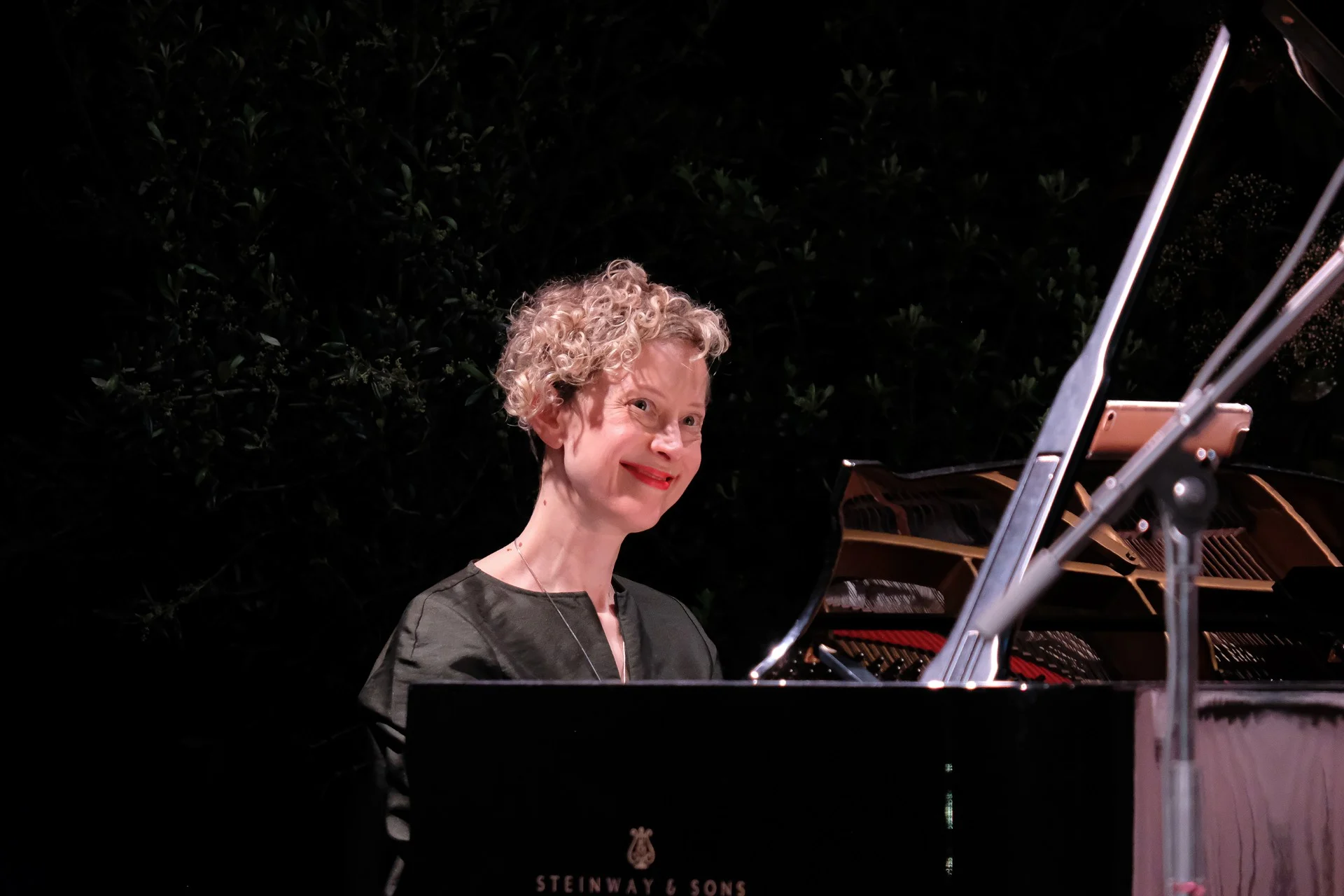
Image: Dr Xenia Pestova Bennett, Photo by Paul Chambers